
This course provides a comprehensive exploration of South American archaeology with particular emphasis on the rich civilizations of the central Andes. Through a chronological journey spanning from the Early Preceramic period (ca. 10,000 BCE) through the Spanish colonial period, students will examine the remarkable cultural developments that shaped pre-Columbian South America. We will investigate major archaeological cultures including Chavín, Moche, Nazca, Tiwanaku, Wari, Chimú, and the Inka Empire, analyzing their social organization, technological innovations, artistic achievements, and territorial expansion.
The course is grounded in contemporary archaeological theory and emphasizes decolonial perspectives, challenging traditional narratives and incorporating Indigenous knowledge systems and multivocal interpretations. Students will engage with current debates in Andean archaeology, including discussions of state formation, environmental adaptation, ritual landscapes, and the impacts of Spanish colonization on Indigenous communities.
Prerequisite: ANTH105 (or instructor’s authorization)
- Methodological Innovations
- Course Content
- Podcast
- Gallery
Methodological Innovations
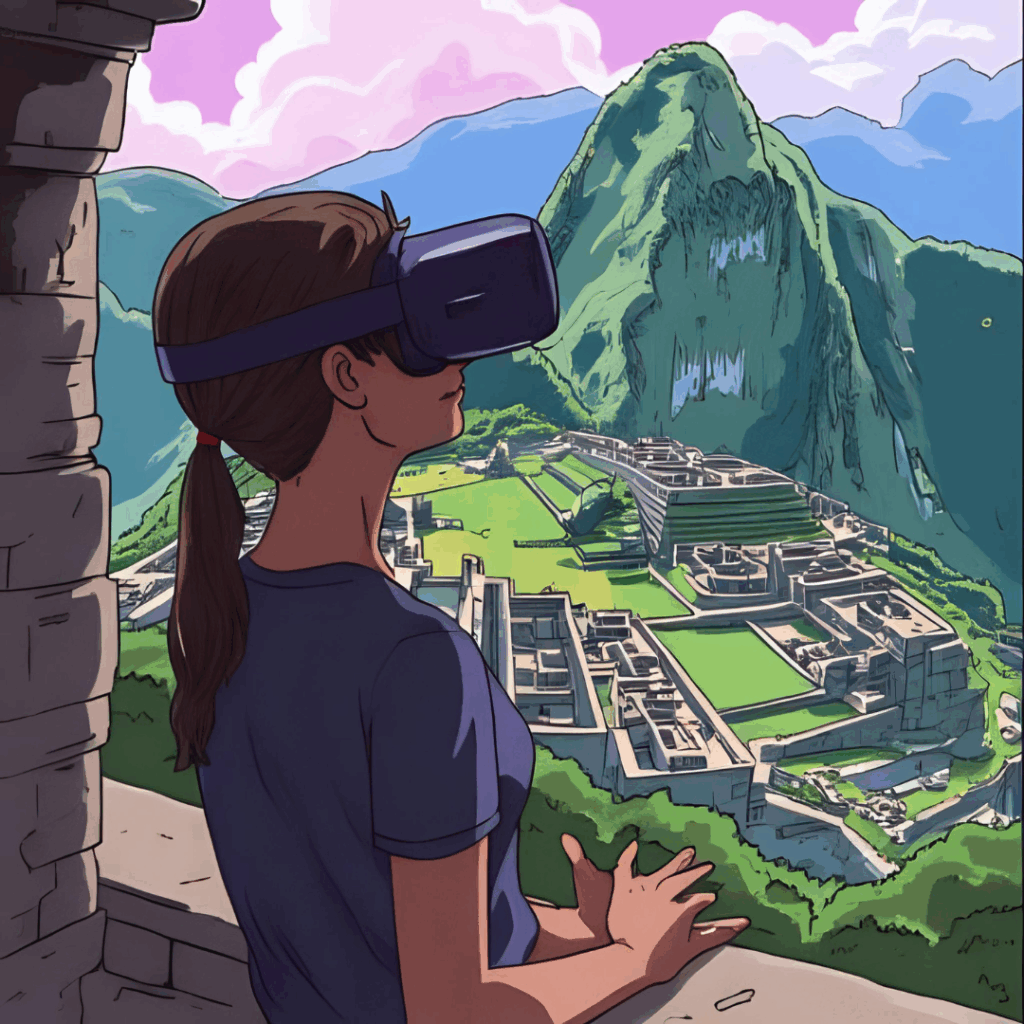
Inmersive Learning
Students will take advantage of the newly inaugurated Immersive Learning Center to explore Andean landscapes and archaeological monuments as part of the immersive teaching.
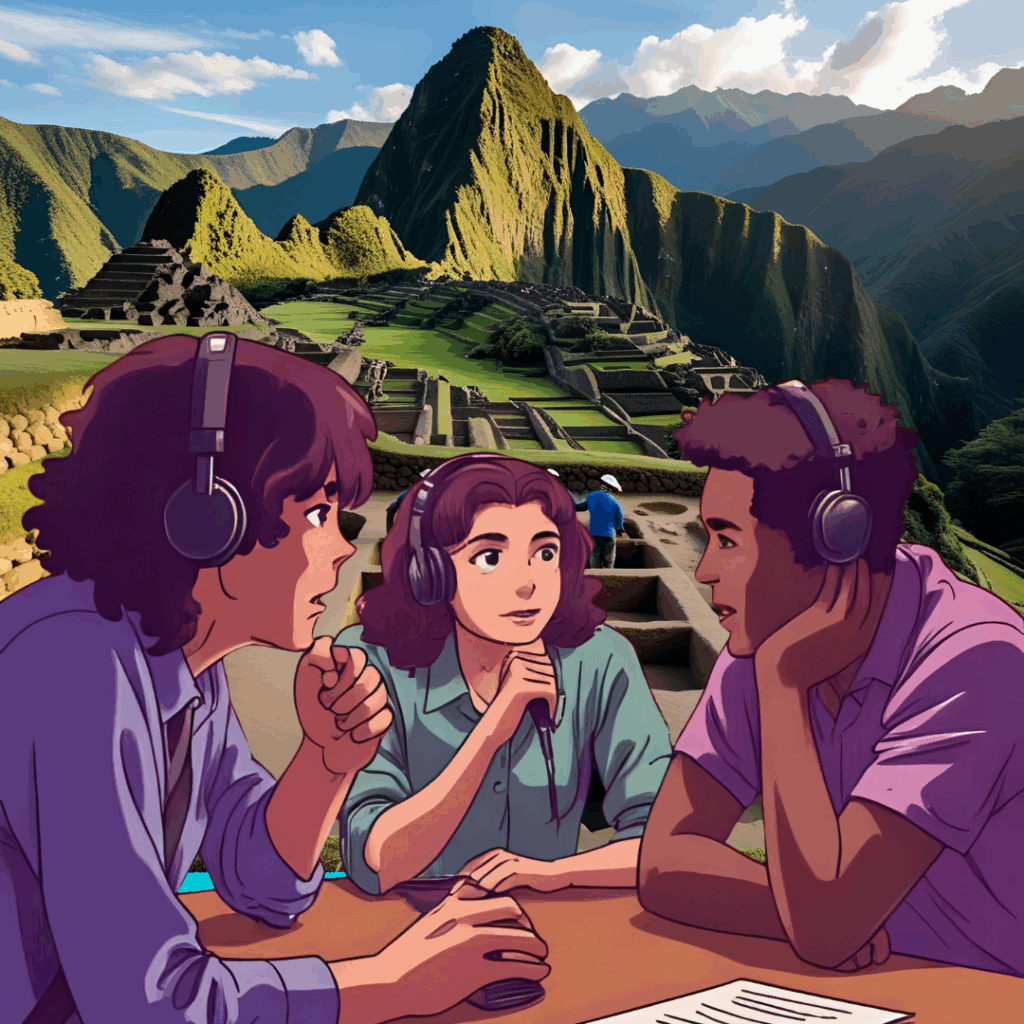
Podcast Production
Students will learn the basics of podcasting through a series of workshops run by the Multimedia Production Studios at Lied Library
| Week | Book Chapters and Themes | Additional Readings |
|---|---|---|
| W 01 | Introduction and theoretical perspective | (Covey, 2020) (Smith, 2021) |
| W 02 | Space, time | |
| W 03 | The Preceramic period | (Covey, 2000) |
| W 04 | The Late Preceramic Period (cont) – The Initial Period | (Burger, 2012) (Mauricio et al., 2021) |
| W 05 | The Early Horizon | (Contreras, 2024) |
| W 06 | The Early Intermediate Period – Moche | (Muro Ynoñán, 2018) |
| W 07 | The Early Intermediate Period – Nasca | (Vaughn, 2004) |
| W 08 | The Middle Horizon – Wari | (Conlee et al., 2021) (Fernandini Parodi, 2018) |
| W 09 | The Middle Horizon – Tiwanaku | (Janusek, 2006) (Becker, 2017) |
| W 10 | The LIP – Chimú | (Prieto et al., 2019) |
| W 11 | The LIP– The Central Coast | (Pozzi-Escot & Bernuy, 2022) |
| W 12 | The Late Horizon – Inka Origins and Expansion | (Hernández Garavito, 2020) |
| W 13 | The Late Horizon – The Inka Provinces | |
| W 14 | The Spanish invasion and the early colonial period | (Hernández Garavito & Oré Menéndez, 2023) |
Archaeological Sites in the Andes… the podcast

This podcast highlights various archaeological sites in the Andes by interviewing students who have become experts on them. In each episode, a student interviews a colleague based on a previously written essay about the selected archaeological site. The goal is to discuss the sites’ importance and create a fluid conversation while sharing accurate information.
Students from the Archaeology of South America class had three workshops with David Ramos-Candelas from the Multimedia Production Studios at Lied Library, where they learned to record and edit audio for podcast production. These are the interviews for season one of the podcast. Enjoy!
Season 01 Fall 2024, Season 02 Fall 2025

-
S02 E02 – Cerro Baúl with Alexandra Espinoza
Jan 30, 2026 • 00:04:03
-
S02 Ep 01 – Chiribaya interview with Loren Carter
Jan 30, 2026 • 00:03:49
-

S01 E05 Archaeological sites in the context of the Andean Past: Mawchu Llacta – Interview to Cynthia Marrufo by Edgar Vera
Dec 16, 2024 • 7:15
Nestled in the upper reaches of the Colca Valley of southern highland Peru resides the siteof Mawchu Llacta, whose nominal roots exist in the Quechua language. However, at the time ofits establishment in the 16th century, Mawchu Llacta would have existed as Santa Cruz de Tute, aSpanish colonial town known…
-

S01 E04 Archeological Sites In The Context Of The Andean Past:Huanuco Pampa – Interview to Edgar Vera by Cynthia Marrufo
Dec 16, 2024 • 5:18
The Incan Empire. A vast and powerful nation that occupied a large portion of WesternSouth America on the Andean Mountains from the Pre-Columbian early 1400s to the 1500swhen the Spanish conquered the land and its people. Known as “The Realm of the Four Parts,”the expansive empire consisted of political, administrative,…
-

S01 E03 Echoes of an Empire: The Wari Connection to the Inka – Interview to Dylan Jahrling by Anjali Sumpter
Dec 16, 2024 • 7:05
The Wari archaeological site near the modern-day Ayacucho in Peru’s central highlands isa cornerstone of Andean archaeology and a critical precursor to the Inka Empire. Flourishingduring the Middle-Horizon period (600-1000 CE), the Wari civilization marked one of SouthAmerica’s earliest instances of state-level organization. The site demonstrates remarkableadvancements in urban planning,…
-

S01 E02 Tiwanaku: A Comprehensive Study of an Andean CivilizationTiwanaku – Interview to Daniela Mirabal Torres by Mateo Castro
Dec 16, 2024 • 6:34
Tiwanaku, located on the southern shore of Lake Titicaca in modern-dayBolivia, is one of the most significant and enigmatic archaeological sites in theAndes. This ancient city, once the capital of the Tiwanaku civilization, flourishedbetween approximately 500 and 1000 CE, predating the rise of the Inca Empire byseveral centuries. Known for…
-

S01 E01 Chan Chan: Power Through Architecture, interview to Mateo Castro by Daniela Mirabal Torres
Dec 16, 2024 •
Chan Chan is often advertised as the largest mud city in the world to the public. However,this statement tends to undermine the significance of Chan Chan as an archaeological siteimportant to the Andes. Chan Chan, located near the city of Trujillo, Peru, was the royal capitalfor the Kingdom of Chimor.…
Gallery


